


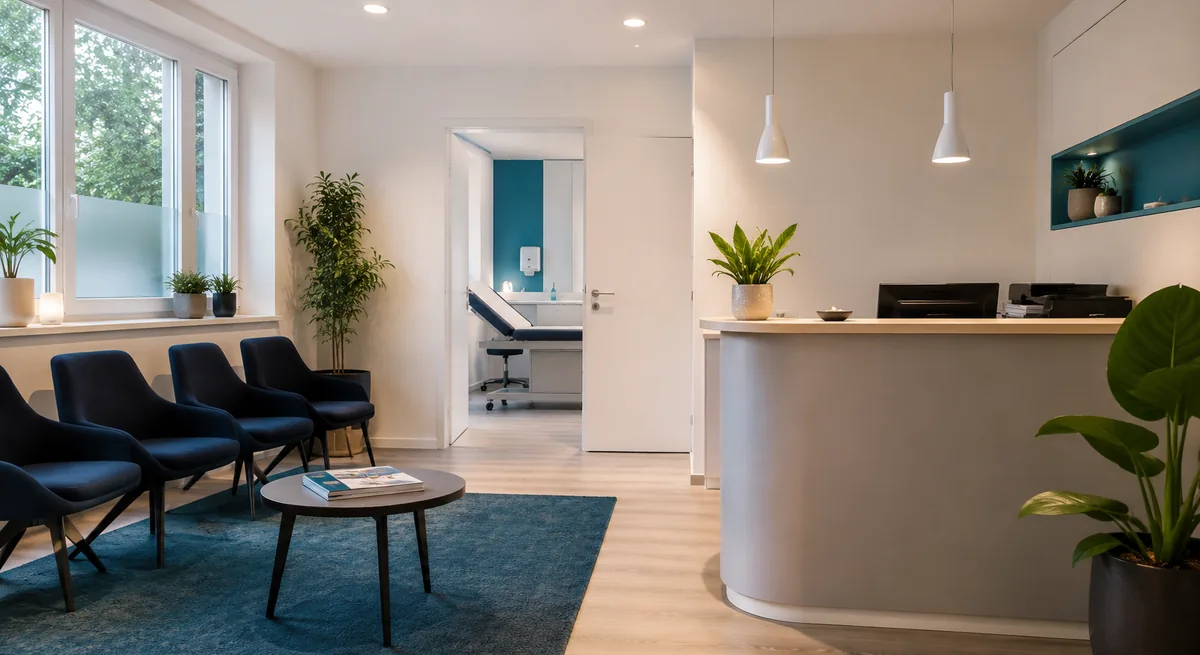
Routine cleaning for a medical practice is defined from the actual premises, the practice’s instructions and a written quote. This article helps prepare the site visit. It does not set a clinical protocol, promise automatic disinfection or cover the reprocessing of medical devices or healthcare waste.
The aim is to separate what may form part of routine premises cleaning, what needs a precise instruction and what must remain outside the quote or be handled through a specialist solution.
Start with the site visit and the practice’s instructions
Two practices of a similar size can operate very differently. During the visit, the provider needs to look at how the rooms are used, the materials present, circulation routes, access arrangements and the surfaces that will actually be clear when the work takes place.
The practice should also provide its own instructions and identify any areas, objects or situations that require particular care. General guidance does not replace these details; they help determine what can be proposed.
Separate routine premises cleaning from clinical requirements
Reception, waiting rooms, corridors and washrooms may form part of routine premises cleaning when they are listed in the quote. In consultation areas, only the accessible surfaces expressly identified are considered.
Medical devices, instruments, treatment products and documents are never assumed to be included. If a request concerns a clinical process or an obligation belonging to the practice, the practice must define it and its feasibility must be checked before it can appear in the quote.
Describe every accessible surface clearly
A general phrase such as “practice cleaning” is too vague. The quote may identify floors, skirting boards, clear surfaces, reception furniture, handles, switches, washrooms or accessible glazing, according to what has been inspected and accepted.
- which surfaces will be clear and accessible;
- which devices, objects or documents must not be touched;
- which materials need particular care;
- who prepares the rooms before the visit.
This detail protects both parties and avoids moving, handling or treating a sensitive surface on the basis of an assumption.
Cleaning and disinfection are not the same
Cleaning removes soil and residues. Disinfection has a different purpose and is not an implied extra. If it is requested, the practice provides its requirements.
Before it can be included, the provider must review feasibility, authorisation for the intended use, label instructions, material compatibility, contact time and protective measures. Only an expressly accepted procedure can appear in the quote; a specialist solution may be required.
Review products, equipment and instructions
Products and equipment depend on the task, surface and information available. Labels and instructions for use must be followed. If the practice requires a particular product, sequence or instruction, it should provide this information before the quote so that compatibility can be reviewed.
Fast Clean therefore does not present one product or procedure as suitable for every practice. Boundaries, possible incompatibilities and responsibilities should be clear before the service starts.
Handle devices, waste and incidents separately
Healthcare waste, sharps, medical devices and incidents involving blood or other body fluids are not treated as ordinary routine cleaning. The practice must identify them before the quote.
They are not automatically included: responsibilities and the appropriate solution must be defined separately. Where specialist handling or a regulated disposal route is required, it should not be replaced by an improvised instruction to the cleaning team.
Record frequency and timing in the quote
Frequency depends on the actual use of the rooms and the practice’s instructions. A visit may be considered during the day, before opening or after closing. The agreed time slot, access arrangements and related tasks should appear in the quote.
What the quote should record
- the rooms, surfaces and tasks included;
- items excluded or reserved for practice staff;
- accepted products, instructions and precautions;
- frequency, timing and access arrangements;
- what to do if an area is unavailable or an unusual situation is found.
Our online cleaning plan can help you list areas and preferred frequencies before the site visit. Our page on medical practice cleaning explains how Fast Clean prepares a quote based on the premises inspected.
Official sources consulted
- World Health Organization — Environmental cleaning in healthcare facilities.
- European Chemicals Agency — Using biocidal products.
- Luxembourg Environment Administration — Problematic waste.
These sources provide general guidance. The instructions that apply to the practice and each party’s responsibilities must still be defined for the actual situation.
Prepare the quote for your practice cleaning
Show us the rooms, accessible surfaces, instructions and boundaries. The site visit is used to define the routine premises cleaning that can be included in the quote.
Request a site visit and quote