


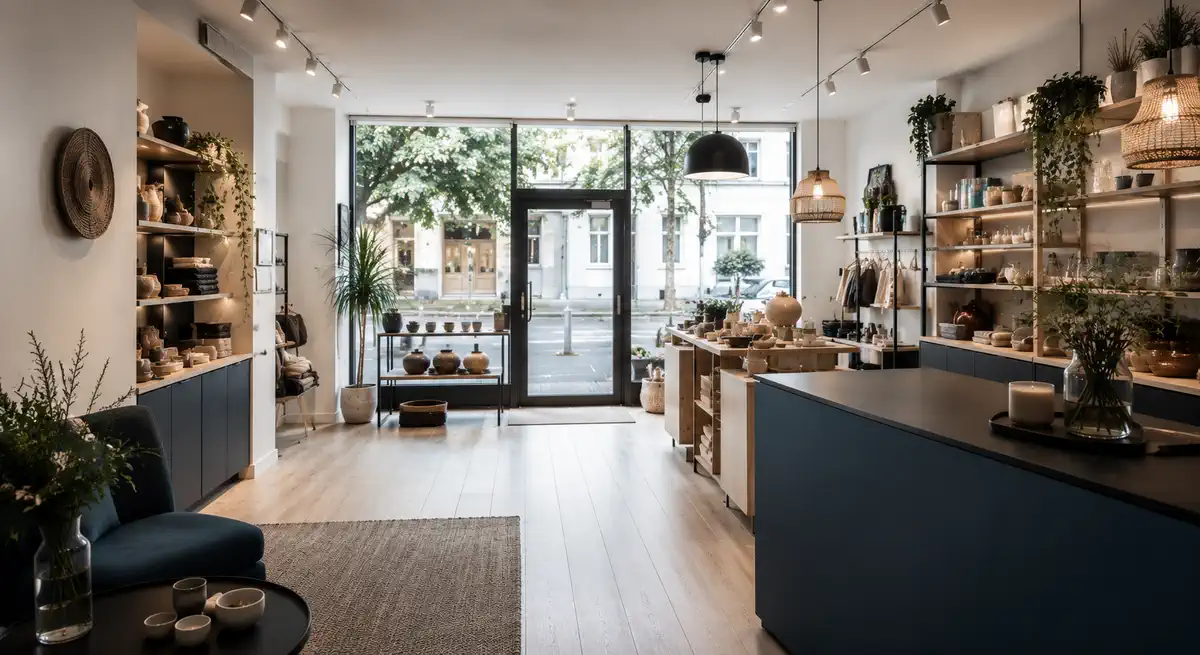
The right time to clean a shop depends on its opening hours, customer traffic, surfaces, access arrangements and the tasks agreed in advance. Cleaning can be considered before opening, after closing or during the day, but not every task suits every time slot.
A site visit is the opportunity to look at how the shop actually operates. The areas, tasks, frequency and working times can then be recorded in the quote instead of applying the same arrangement to every business.
Start with opening hours and actual footfall
Two shops with similar floor areas may need very different arrangements. The visit should identify busy and quiet periods, delivery times, staff movements, customer routes and the moments when an area is genuinely available.
This review helps distinguish tasks that can be done while the shop is trading from those that need an empty area or a longer drying time. No time slot should be selected without looking at the work involved.
Before opening: check access and the time available
A pre-opening visit may suit tasks that require clear walkways and time for surfaces to dry. Before choosing it, the business and provider need to agree access arrangements, keys or alarms if relevant, the actual time available and the condition in which the premises must be left for opening.
This is not automatically the best option. If the available window is too short for the agreed tasks, the scope or the timing needs to be reconsidered in the quote.
After closing: define the operating conditions
After-hours work may make it easier to access the sales floor, fitting rooms or circulation areas without customer traffic. It still requires clear arrangements for access, security, closing procedures and the handover of any useful information.
The fact that the shop is empty does not automatically mean that every task, machine or product is suitable. The surfaces, products and operations included must be assessed during the visit and written into the quote.
During the day: assess each task and protect walkways
Daytime cleaning can be considered when it is compatible with customers, staff and the layout of the premises. A quiet period alone is not enough: the task must not create an avoidable obstruction, a slippery surface or another poorly controlled risk.
The European Agency for Safety and Health at Work notes that cleaning activities can themselves contribute to slips and trips when the work area and timing are not properly managed. Walkways, temporary signage and the availability of each zone therefore need to be discussed before the service is planned.
Divide responsibilities clearly
In some shops, employees handle day-to-day tidying while an external provider carries out the cleaning listed in the contract. In others, the division is different. There is no universal model, but there should be no grey area.
The quote should state which areas and tasks are assigned to Fast Clean, how often they are carried out and which items remain the responsibility of the shop. A written division avoids relying on informal assumptions at the end of the day.
Include or exclude each area in the quote
The sales floor is only one part of a retail site. Depending on the premises, the visit may also cover the entrance, fitting rooms, accessible glazing, counters, staff areas, washrooms, stockrooms or back offices. Their inclusion is never automatic.
The same applies to products and equipment. Labels, instructions and compatibility with the surface must be checked before use. The European Chemicals Agency provides general guidance on handling chemicals at work, but the actual choice still depends on the product and task considered.
Review the arrangement when trading patterns change
Sales periods, stocktakes, refurbishment, deliveries or a change in opening hours can alter customer traffic and access to certain areas. They do not create an automatic cleaning programme. If the existing arrangement no longer fits, the business and provider should review the affected tasks, frequency or time slot together.
What the site visit and quote should define
- the areas included and any exclusions;
- the task expected in each area;
- the agreed frequency and time slot;
- access, alarm and closing arrangements where relevant;
- the products, equipment and surface-specific precautions;
- how changes or access problems will be communicated.
Our cleaning plan tool can help you organise the areas and desired frequencies before the visit. Our page on retail and showroom cleaning explains how Fast Clean prepares a tailored quote. If your premises are in the Foetz business park, see our page on office, retail and showroom cleaning in Foetz.
Official sources consulted
- European Agency for Safety and Health at Work — Preventing slips and trips among cleaners.
- European Chemicals Agency — Chemicals at work.
Prepare the cleaning of your shop
A site visit is used to define the areas, tasks, frequency and time slot to be recorded in the quote.
Request a site visit and quote