


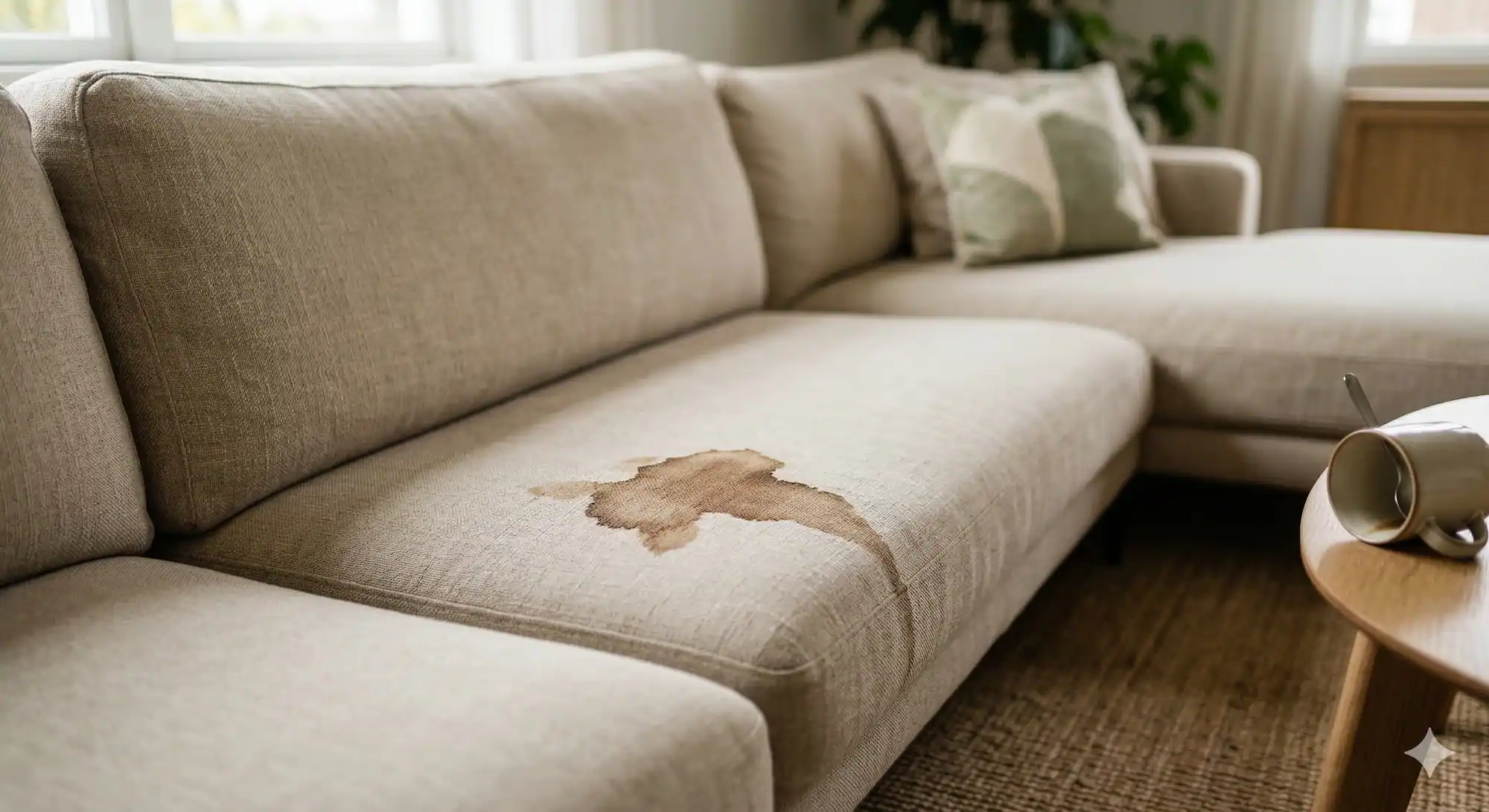
A spilt coffee, a smear of chocolate, a slice of pizza that lands on the cushion… The sofa is part of everyday life, and sooner or later it tends to show.
Before reaching for several stain removers, a few simple steps may already help. Cold can loosen chewing gum, an absorbent powder can draw out grease, and gentle cleaning can deal with small food marks. The important thing is to match the method to the problem.
First things first: remove what you can
For a liquid spill, take a clean cloth or some absorbent kitchen paper and press it gently onto the mark. Move to a fresh part of the cloth when it becomes soaked.
For chocolate, cream or sauce, pick up the excess with a spoon first. There will then be less material left to remove from the fabric.
Before trying a water-based remedy, simply check that your sofa can be cleaned this way. A small label beneath a cushion may tell you. Test the method on a hidden area as well, then let it dry. This will show whether the colour or appearance of the fabric changes. The damp methods below are for suitable fabrics, not upholstery that must be dry-cleaned.
A grease stain: try Terre de Sommières
A drop of oil, a butter mark or a little cream is where Terre de Sommières can be useful. This absorbent powder draws out grease and lets you start without wetting the sofa.
Once you have removed the excess:
- Cover the mark with a layer of Terre de Sommières without sending the powder into the air.
- Leave it to work for several hours, or overnight if convenient.
- Gently remove the powder with a soft brush, then vacuum up the dry residue if your machine is suitable for fine powders.
This method is included in advice from CPIE Loire Anjou for greasy marks on a fabric sofa.
It may help with the grease, but it will not necessarily remove the colour from tomato sauce or make-up. A stain can contain several things: taking out the greasy part does not always remove everything else.
Chocolate: lift the excess, then clean lightly
Melted chocolate spreads easily, so start by picking it up with a spoon without pressing it any further into the fabric. If it has already hardened, gently lift whatever comes away.
On a fabric that can be cleaned with water, you can then try a little mild, neutral detergent without bleach, diluted in lukewarm water.
Dampen a cloth with this mixture, wring it out well and work gently over the mark. Then use a second cloth, lightly dampened with clean water, to remove any detergent residue. Finish with a dry cloth.
Chocolate contains fat, so a trace may remain after this first clean. Lifting the excess and using diluted neutral detergent are among the methods described by the University of Georgia for chocolate stains on upholstery. This does not mean that one pass will always be enough.
Stuck chewing gum: the ice-cube trick
Pulling at chewing gum while it is still soft is more likely to spread it and take fibres with it. Cold helps to harden it so that it comes away more easily.
Put a few ice cubes in a watertight bag and hold it against the chewing gum. The bag stops the melting ice from wetting the sofa.
Once the chewing gum becomes firm, lift it little by little with the edge of a spoon or a plastic card. If it softens again, put the cold bag back before continuing.
The aim is to lift the gum, not scrape the fabric. The University of Georgia also describes this method for upholstered furniture.
The cold may remove the sticky piece, but it will not necessarily take away a small mark left underneath.
A removable cover: make use of it
If your cushion has a zip and a removable cover, check whether it can go in the washing machine. When it can, you may wash the whole cover instead of repeatedly working on one small area.
Use the temperature and programme shown on its care label. Before washing, lift off any pieces or residue still sitting on the stain.
If the cover requires dry-cleaning, taking it to a dry cleaner is a practical option. Bring the label with it and simply say what caused the stain if you know.
Check the drying instructions too. A cover that shrinks may be difficult to put back on the cushion, so the tumble dryer is not automatically a useful shortcut.
What about a leather sofa?
Do not automatically use fabric remedies on leather.
Start by absorbing a fresh spill with a soft cloth. On smooth leather whose care instructions allow damp cleaning, a barely damp cloth may then remove a small amount of surface dirt. Wipe it dry afterwards.
Suede, nubuck and very absorbent leathers need a different approach. Water can change their appearance, so they are not the right surfaces for a remedy intended for washable fabric.
For more detail, our article on caring for a leather sofa covers this subject separately.
Vinegar and bicarbonate of soda: not for every stain
They appear in many home-remedy recipes, but being popular does not mean they remove everything.
In tests on textiles before washing, Que Choisir found limited results for vinegar and bicarbonate of soda, with performance varying by stain. These tests were not carried out on sofas, so they cannot promise a result on your upholstery. Their useful lesson is that supposedly universal recipes deserve some caution. See Que Choisir's test results.
There is no need to add them automatically to every clean. For grease, an absorbent powder has a specific job. For a food mark on a suitable fabric, gentle cleaning can be a sensible first try. Adding more ingredients does not necessarily make a better solution.
Let the sofa dry after cleaning
Once the residue has gone, absorb the moisture with a clean towel and let air circulate around the cleaned area.
Wait until it is dry before judging the result or trying again. Damp fabric often looks darker, and only when it has dried will you see what is really left of the stain.
If the mark remains, there is no need to jump straight to a stronger mixture. A washable cover, cleaning suited to the upholstery or specialist help may be more useful than a succession of new attempts on the same spot.
Home remedies have their place. A few simple ingredients and well-chosen steps can be genuinely useful without turning every small accident into a complicated operation.