


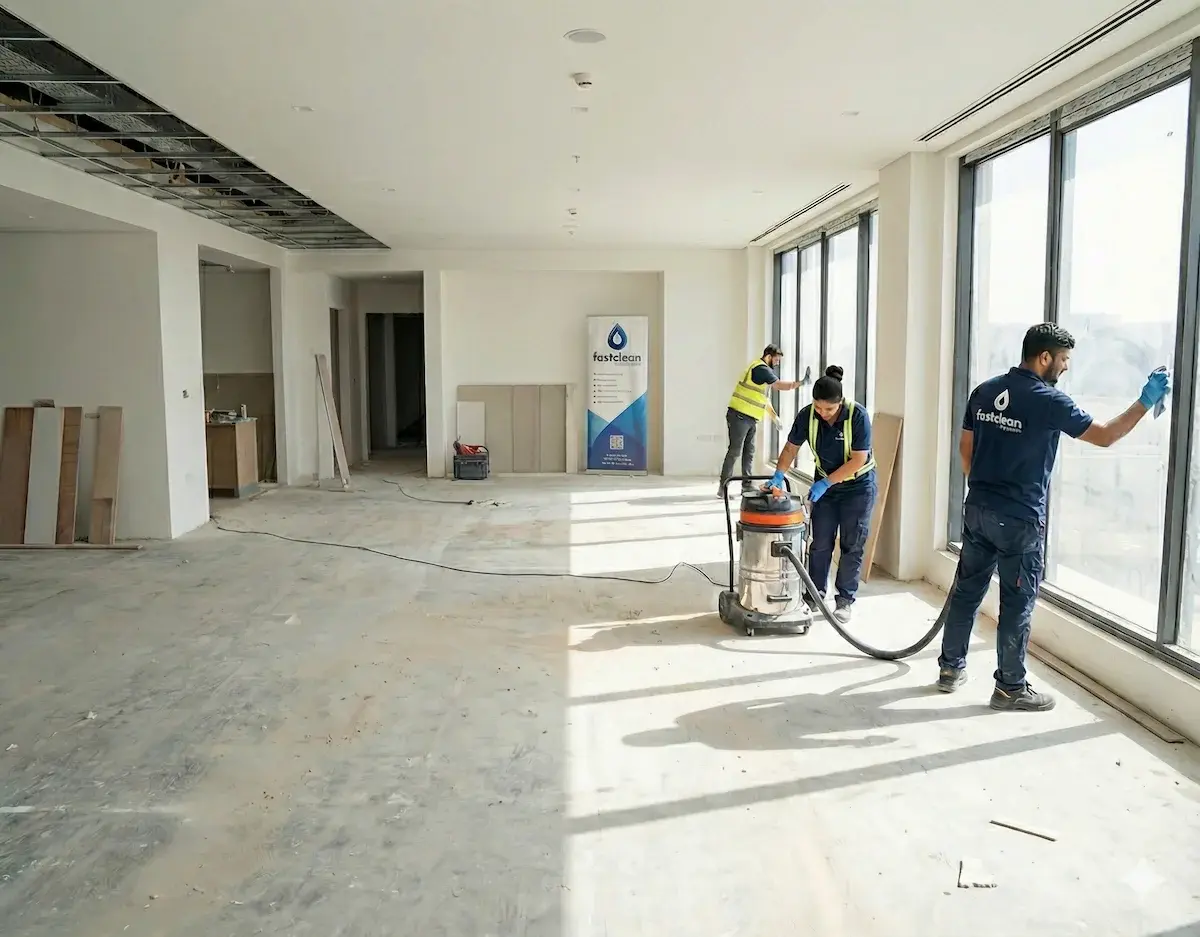
Once building work is complete, dust is not the only issue left behind. Paint, adhesive, silicone, grout and protective film do not come away in the same way, and some marks may still be the responsibility of the contractor who carried out the work.
Before deciding on a method, duration or equipment, the residue, surfaces, access and the contractors’ instructions need to be reviewed. At Fast Clean, only the work selected after that review and written into the quote is included.
Cleaning or construction follow-up: clarify responsibility
Post-construction cleaning does not correct unfinished building work or replace snagging by the contractor. Large debris, surplus materials, installation defects and protective coverings still due to be removed should be assigned before the site review.
A visible mark is not automatically a cleaning task. If a surface still needs correction, drying or curing, that should be known before any cleaning takes place. It helps avoid damaging a new finish or hiding a defect that still needs attention.
Identify the dust before moving it
Dust varies with the work and materials involved. Cutting, grinding or drilling certain concrete, mortar, brick or tile products can produce respirable dust containing crystalline silica. Its appearance or colour is not a reliable way to identify it.
Important: dry sweeping can put fine dust back into the air. The method and protective measures must reflect the risk that has actually been identified. If the dust is unknown, ask the contractor or a competent health and safety professional before proceeding.
Information to prepare for the site review
The following details make it easier to understand the actual condition of the premises:
- the rooms and areas affected;
- the work completed and materials used;
- visible residue and its source, where known;
- new, delicate or already damaged surfaces;
- manufacturers’ care instructions;
- access, heights and obstacles;
- any finishing work or touch-ups still planned;
- who is responsible for removing large debris.
Photographs can help with the initial discussion, but they do not replace a visit when the residue, surfaces or access cannot be assessed reliably from a distance.
What the quote needs to define
The scope should be clear to both parties. In particular, the quote should identify:
- the accessible areas and surfaces;
- the residue included and anything excluded;
- the agreed operations;
- products, tools or machines considered appropriate after review;
- access and protection requirements;
- whether a specialist may be needed;
- the date and, where necessary, the number of visits.
An operation is included only when it appears in the quote. Equipment, the number of passes and the expected result cannot be assumed from the type of project alone.
Different surfaces need different decisions
A paint spot on glass, a film on tile and dust on a timber floor need different approaches. The residue and underlying material should be identified before choosing a product or applying friction. An untested method can spread the mark, scratch the surface or cause an unwanted reaction.
For windows, the quote states which accessible sides are included. An exterior face, height or lack of safe access may require different arrangements or a specialist. Accessible ventilation grilles and the inside of ventilation ducts are also separate tasks.
When can the cleaning be scheduled?
You can submit the request before your preferred date, but cleaning should be scheduled after dusty work and final touch-ups are complete. Paint, grout, flooring and other new finishes also need to be ready for cleaning under the manufacturer’s or contractor’s instructions.
Cleaning before furniture is moved in can make access easier, but it is not a rule for every project. The date is confirmed after the premises, scope and availability have been reviewed.
If you plan to clean it yourself
First identify the dust, products and surfaces, then follow the site rules and manufacturers’ instructions. Avoid putting fine dust back into the air, and stop if the residue or the compatibility of a method is unclear.
Hazardous or unknown dust, large debris, work at height and delicate surfaces may fall outside ordinary cleaning. Ask a competent professional for advice before continuing in those situations.
Home or business: choose the relevant service page
For a house or flat, see our post-renovation cleaning page for private customers. For offices, shops and other business premises, visit our page on cleaning after building work for businesses. In both cases, the work included is defined only after the request has been reviewed and written into the quote.
Safety sources consulted
- INRS — key information on crystalline silica (in French)
- HSE — sweeping and cleaning on construction sites
Tell us about the site
Describe the areas, work completed, residue, surfaces and access conditions. After reviewing the request and, where necessary, visiting the premises, Fast Clean will confirm what can be considered, what is included and which date can be offered.
Request a quote